
Product Introduction
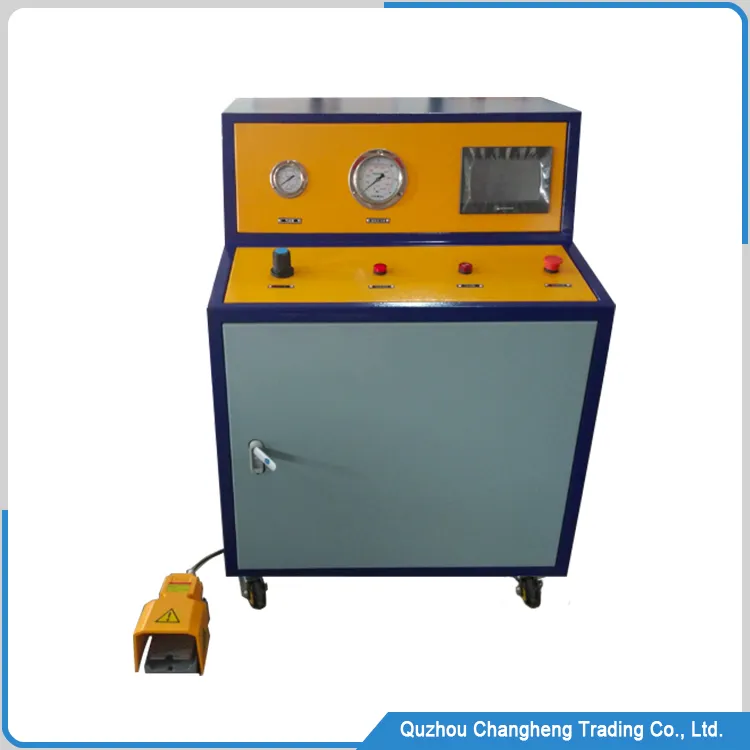
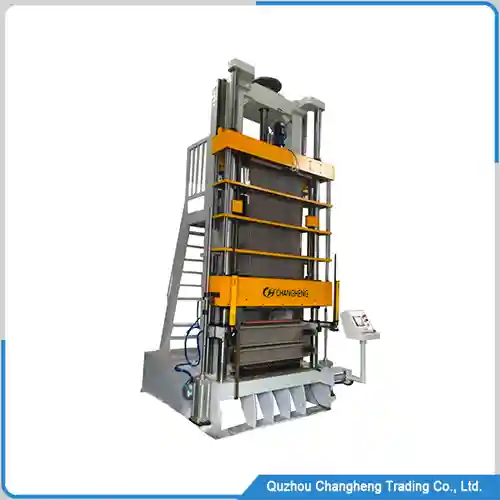
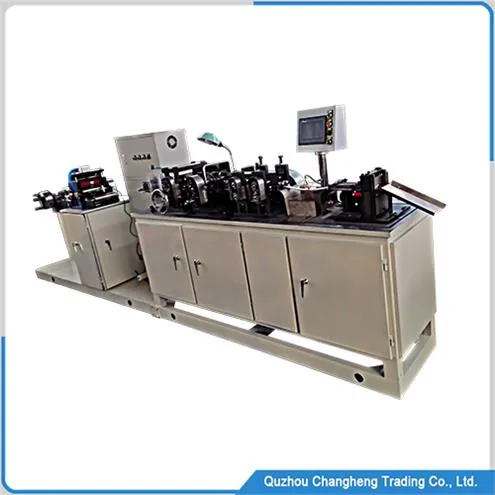
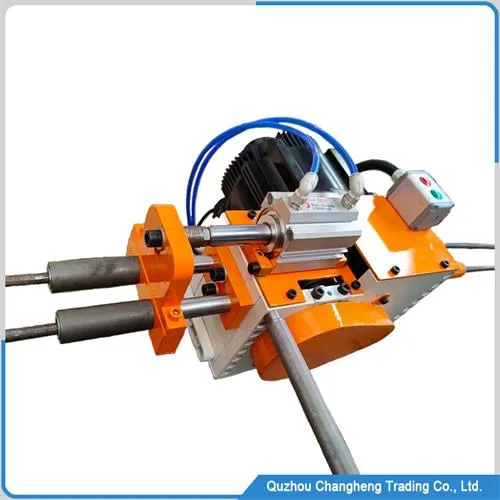
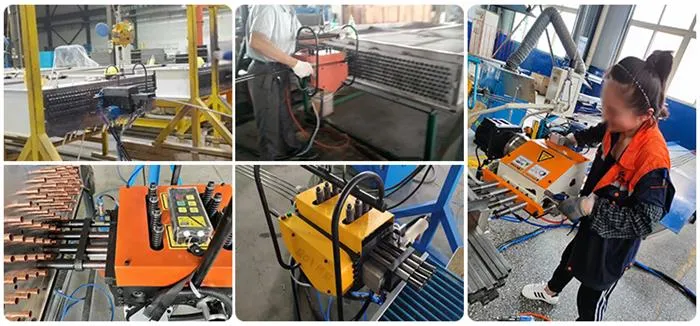
A portable expander machine rolls the tube wall outward inside a heat exchanger, locking each tube into its fin and tube sheet. The tube goes through the hole first, then the expansion ball is pushed through the bore and the metal is pressed against the hole wall until the joint is tight enough to hold pressure.
You will find this machine in air conditioner condensers, evaporators, household water heaters, auto radiators and shell-and-tube exchangers in chemical plants. Standard tube outside diameter is 6 mm to 20 mm; other sizes are made to drawing.
Its characteristic is that the operation is very convenient. It can produce pipes of different materials and sizes. Without the need for complex tool replacement and debugging time, it is very easy to operate for pipelines of large expansion heat exchangers, which can help customers improve production efficiency and reduce costs.
Servo drive suits most tube expansion work, and it is the reason this machine has no hydraulic station. But it is not the right answer for every job. Thick-wall stainless and titanium tubes, and tubes above 20 mm outside diameter, still take a hydrostatic or hydraulic machine that can push far more force through the bore. If your job sits in that range, look at our hydraulic pipe expander machine instead of this one. What we can tell you here is where the servo version wins, and why.
Portable expander machine Technical parameters
| Parameter | Value |
| machine language | Servo motor |
| Expansion tube length | 5-10m optional |
| Control type | PLC |
| Touch screen | Yes |
| machine Language | English & Chinese |
| Voltage | 5.5kW |
| Tube size | 6-20mm |
| Ball material | Tungsten steel |
| Tube material | Iron, copper Aluminum Stainless steel Titanium. |
| tube diameter | Customized |
Portable expander machine advantages
Expansion length you change from the screen
Type the new length on the touch screen and press start. You do not change a tool, you do not move a limit block, and you do not stop to re-measure. On a shop that switches between several exchanger models in one shift, this is the difference between a 40-minute changeover and a 2-minute one.
Copper, aluminum, iron, stainless steel and titanium
The expansion ball rolls the wall instead of hammering it, so soft copper and aluminium come out without flattening, and stainless or titanium can be expanded with the right ball and the right rod length. Tube outside diameter runs from 6 mm to 20 mm as standard. Below or above that, send us the tube drawing and we will tell you whether this portable expander machine can do it — sometimes the answer is that you need the hydrostatic machine instead.
Repeatable to 0.01 mm
The servo controls how far the threaded rod travels, and the rod is what sets the expanded length. In practice the position repeats within 0.01 mm, which is what keeps a leak test passing on tube 800 and still passing on tube 8000. Nobody has to stand there with a gauge and re-check every joint.
Screen in your own language
The touch screen ships in English and Chinese. We can load Russian, Spanish, Portuguese, French or Arabic before the machine leaves the factory, at no extra cost. If your operators read the screen in their own language, you spend less time training them and fewer of them press the wrong button.
Portable expander machine working video
Portable expander machine Applications
A portable expander is a finishing machine, not a forming machine, so it shows up wherever tubes have to be fixed into a tube sheet after the core is assembled. The list below covers the products our customers build with it most often, and what makes each one a good fit.
Next, let’s give examples to illustrate which products need this portable expander machine to be frequently produced.
- Domestic water heaters and gas boilers
- Air conditioner condensers and evaporators
- Auto radiators
- Large central air conditioning
- Refrigerated truck and trailer heat exchangers
- Marine radiators and oil coolers
- Shell-and-tube exchangers in chemical plants
What Is Inside the portable expander machine
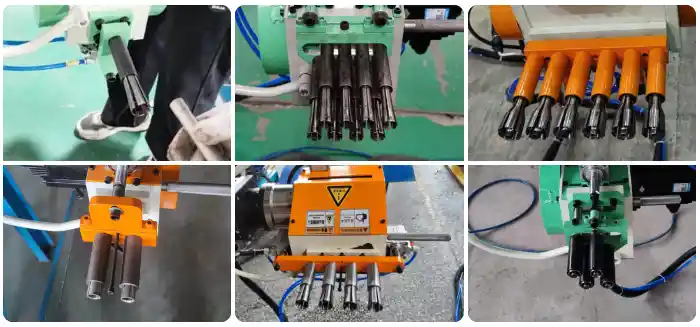
Expansion head assembly. Carries the rod, guides the ball and absorbs the reaction force. This is the part that takes the hardest load.
Threaded expansion rod. The rod that drives the ball forward. Standard length is 6 m; 10 m and 20 m rods are built to order. It is made from spring steel, hardened and then ground, because it has to be springy and rigid at the same time.
Tungsten steel expansion ball. The one part that touches the inside of the tube. It is replaceable, and swapping the ball is how you change the expanded diameter. A new ball costs very little, which is where a lot of the saving on this machine comes from.
Gantry frame. Holds the expansion head level with the tube. Without it, a long tube comes out tighter at one end than the other.
Spring balancer. Takes the weight of the head so one operator can move it by hand. On a 10 m workpiece this is not a convenience, it is the difference between being able to do the job and not.
Electrical control box. PLC and touch screen. Length, count and speed are all set here.
Why There Is No Hydraulic Station
Servo drive suits most tube expansion work, and it is the reason this machine carries no hydraulic station. It is not the answer to every job, and it is worth being straight about that.
- Noise
With the servo running, the portable expander machine stays under 51 dB, which is about the noise of a desktop computer fan. In a workshop it disappears into the background. The low, steady rumble of a hydraulic power pack is simply not there.
- Power
A servo motor does not turn while the machine is stop, and a motor that is not turning is not drawing power. Running cost works out roughly 35% lower than a hydraulic-station machine doing the same job.
- Hydraulic oil
No hydraulic oil means no leaks, no oil changes, no oil temperature to watch and no oil on the floor.
- Maintenance
Take out the hydraulic system and you also take out the oil pump, the solenoid valves, the cylinders and the filters that eventually wear out.
- Where this machine is the wrong choice.
Thick-wall stainless steel, titanium, and tubes above 20 mm outside diameter need far more force pushed through the bore than a servo rod can deliver. Those jobs still belong to a hydraulic machine or a hydrostatic one. If that is your work, go straight to our hydrostatic tube expanding machine instead of forcing this one into a job it was not built for.
Q & A
A: This machine has a 5.5kw servo motor that rotates, and it outputs powerful power through gear conversion torque.
A: Yes. The expansion rod is Provide in 6 m as standard, and 10 m and 20 m rods are made to order. For a 10 m core you either fit the longer rod and expand in one pass
A: Yes. Stainless steel 304 is normal work for this machine with the matching tungsten ball and the right rod length. Stainless is harder than copper, so the feed is run slower and the ball is selected for the tube diameter. If the wall thickness is more than about 10% of the outside diameter, send us a sample tube and we will expand it here first, so you know before you order.
A: Changing tube diameter means changing the ball, and sometimes the rod. In practice that is 10 to 15 minutes. The machine does not have to be taken apart and does not need recalibrating. Changing the length for the same tube size is a new number on the touch screen, which takes seconds.


 wechat


