
If you already have radiator orders but no production line yet, the most expensive thing is rarely the machines themselves. It’s the trial and error. We are the manufacturer of radiator machines in China, We’ve watched too many new plants buy a brazing furnace first, then find out the fin machine they bought can’t take the width of a truck radiator, or that the furnace has no flux spraying system at all. The list goes on.
We’ve been doing this since 2012: equipping radiator, condenser and intercooler factories, from machine selection through to first production run. Twelve years on, that’s 60+ projects delivered across 30+ countries.
No filler here. This page covers every step it takes to build a radiator, which machine handles which step, and how to pick a supplier you won’t regret.
What a radiator machine manufacturer should actually deliver
Most people assume an equipment manufacturer just sells machines. On the day you’re supposed to start production, you find out the machine was only one piece of it. How the shop floor should be laid out, who trains the operators, how the brazing profile gets dialled in — if nobody owns those, the equipment sits in your building and doesn’t run.
Our view is that a manufacturer should hand over a line that actually runs, not a set of machines that each work fine on their own. So alongside the equipment we handle line configuration, installation and commissioning, operator training, spare parts supply, and long-term service.
One sentence on where we stand: you don’t have to buy every machine from us, but you should talk to us before you buy the first one. We provide the technical support you need in the early stage of setting up a radiator factory.
The 6 steps behind every automotive radiator
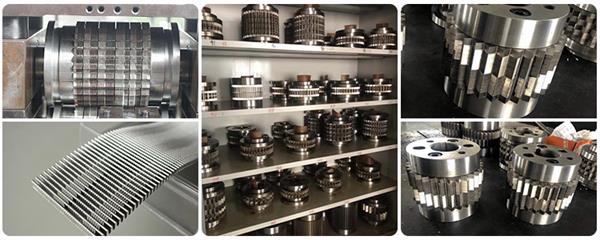
The structure isn’t complicated: a row of aluminum tubes, corrugated aluminum fin between them, header plates at both ends, and a plastic tank on the outside. Getting there takes six steps, and each one has its own machine.
Step 1 — Making the aluminum tube
The first step rolls aluminum strip through a series of forming stations until it closes into a flat tube, then seals the seam with high-frequency welding.
Tube accuracy affects every step after it. If the tube width is off by 0.1 mm, the fin won’t seat during core assembly. That’s the reason we don’t recommend saving money here.
That said, a tube mill is not cheap. For small-volume production we’d rather you buy finished aluminum tube from China than tie up capital in a mill of your own.
Step 2 — Forming the fin
The fin does the actual heat transfer — air passes between the waves and carries heat away. It’s formed from aluminum foil by rolling or stamping, in louvered, wavy or serrated profiles. Automotive radiators and condensers typically run louvered fin 【待确认:箔厚 / 翅片高度】.
Fin machine speed usually sets the pace of the whole line. A high-speed machine turns out tens of metres of fin per minute, which means you don’t need the fastest one on the market — you need one that’s enough.
Step 3 — Assembling the aluminum core
This step lays out tubes, fins and header plates at the designed pitch and builds them into a core. You can do it on a manual assembly table or on a fully automatic core builder.
Automatic machines are driven by multiple servo motors: tubes feed automatically and the operator only tops up the fin. Throughput and consistency are both much better, but so is the price tag. For a new plant running under a few hundred units a day, semi-automatic usually pays back sooner.
Step 4 — Brazing the aluminum core
Brazing is the most technical step in the whole process. The assembled core goes into the furnace and is heated to around 620°C under a nitrogen atmosphere, melting the cladding layer on the aluminum so every contact point fuses into one piece.
Temperature profile, nitrogen purity, flux loading — let any one of them drift and what comes out is a leaker. It’s also why a brazing furnace shouldn’t be judged on price alone. A 5°C spread in temperature uniformity across the chamber will show up in your scrap rate.
We build NOCOLOK nitrogen-protected brazing furnaces, and we also supply vacuum brazing furnaces and batch-type box furnaces. Which one fits depends on your product and your throughput.
Step 5 — Clinching the plastic tank
The brazed core is joined to the plastic tank with a sealing gasket pressed between them. This step is called clinching — some people call it crimping.
Clinching machines come in manual, semi-automatic and fully automatic versions. Under-press and the joint seeps; over-press and you crack the tank. The pressure control matters more than it looks.
Step 6 — Leak testing
The last step is airtightness testing: charge the radiator with compressed air and watch whether the pressure holds, which tells you if there’s a micro leak.
It looks like the simplest step on the list, but it’s the one that keeps complaints away. A single unit that leaks through to your customer costs far more than a testing machine does. Our testers support multi-channel output, and we configure accuracy and cycle time to match your throughput.
Radiator machine manufacturer available for selection
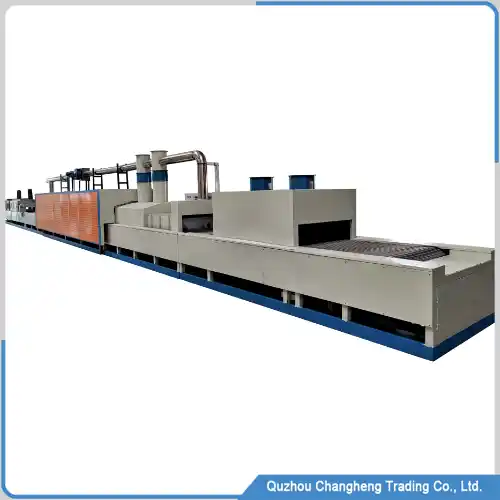
Brazing furnace supplier in China
Furnace Overview As a brazing furnace supplier in China, we are committed to providing high-quality mechanical equipment and comprehensive technical services to global aluminum radiator manufacturers. This brazing furnace is designed specifically for aluminum brazing processes and can meet production…
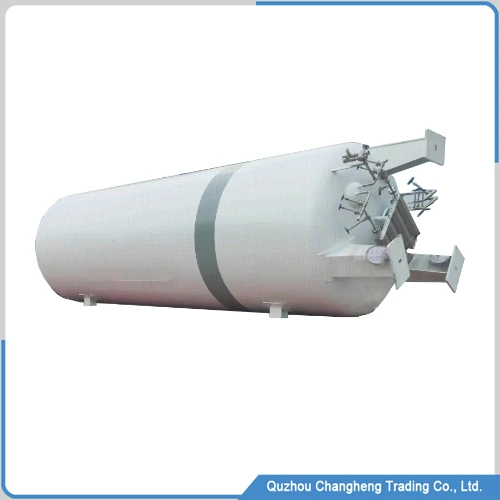
LN2 tank – 10m3 liquid nitrogen dewar
This is an LN2 tank for storing liquid nitrogen, with two layers of tanks nested together. The internal pipes are made of SS304 and the outer layer is made of iron Q345. This LN2 tank has a maximum storage pressure…
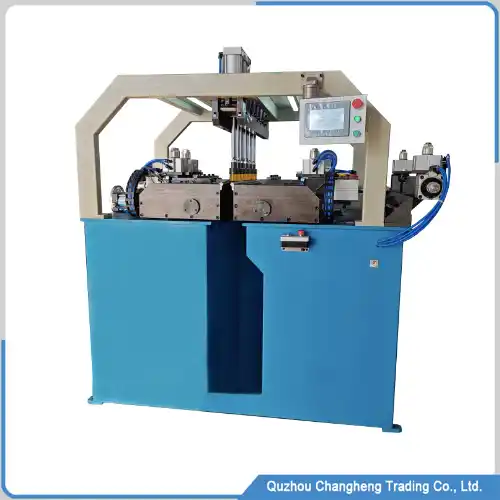
Radiator clinching machine of cars and trucks
Machine Overview This radiator clinching machine is mainly used to produce radiators. Radiator core, sealing gasket, and plastic tank; put them together The machine combines a servo motor drive and a cylinder drive. The electric control system adopts PLC, touch…
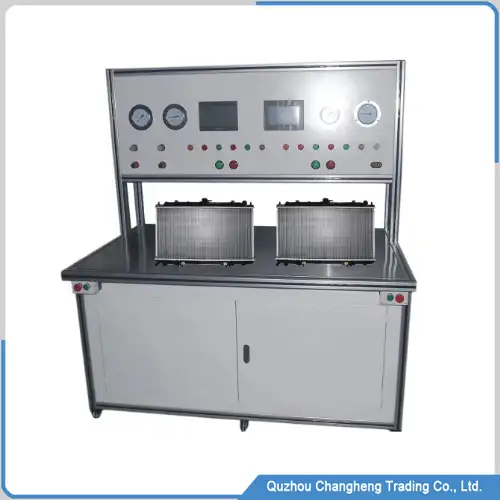
Radiator testing machine of High-precision
Product Description This radiator testing machine is used to check the air tightness of various types of automotive radiator products Compared to the previous generation of machines, this instrument has enhanced the expansion of output ports, quality management, and communication…
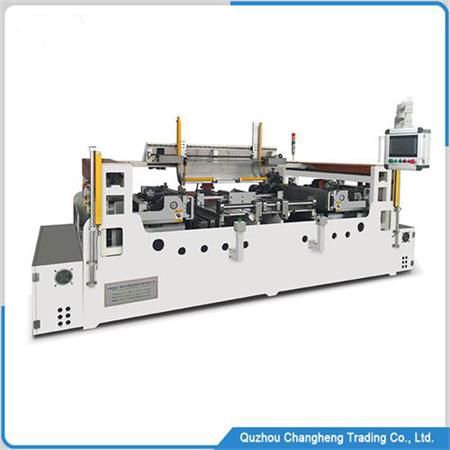
Core assembly machine of radiator | intercooler core builder
Purpose of equipment The fully automatic core assembly machine is one of the production equipment for engines and radiators. Multiple servo motors mainly drive it, and the aluminum tube automatically drips. Workers only need to install the fin, and the…
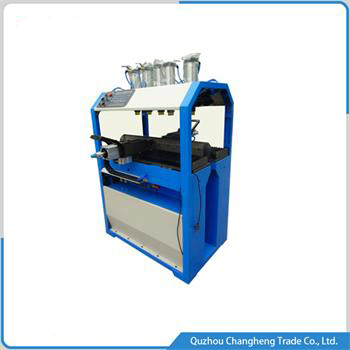
Manual crimping machine of car and truck radiators
Machine Overview The manual crimping machine mainly produces car and truck radiators. Some people say it is a semi-automatic crimping machine. A cylinder drives its pressing arm and is installed on a linear slide rail. The mechanical arm moves smoothly…
Production process video of radiator
Equipment list of radiator machine manufacturer
How to choose a radiator machine manufacturer
If you’re comparing suppliers right now, these four checks will tell you more than the quotations do.
- Check whether they know the process, not just the machine. Ask how they set the brazing temperature curve, and what flux loading they’d recommend. If they can’t answer, what they’re selling is mostly a box of steel.
- Check whether process parameters come with the machine. After delivery, who tunes the brazing profile? That affects your yield more than the hardware does.
- Check spare parts and response time. A day of downtime usually costs more than the price gap between two machines. Ask whether wear parts are stocked, and how fast they get to you after a breakdown.
- Check for real cases. Ask for deliveries of the same product type at similar capacity. A supplier who can name the country, the year it went into production and the actual output is usually telling the truth.
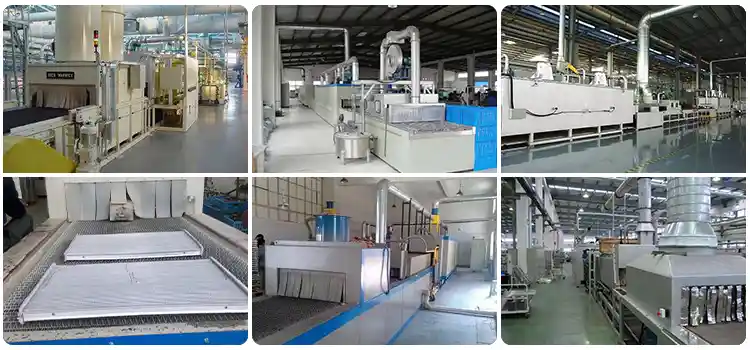
What we do beyond the machines
- Full technical support. From project kick-off through production, someone is on the other end of the line for installation, commissioning and day-to-day problems.
- One-stop equipment sourcing. We configure the complete line to your requirement — fin equipment, brazing equipment, core assembly equipment included — so you’re not chasing five suppliers for five delivery dates.
- Regular maintenance and fast repair. When a machine goes down we respond, which keeps the downtime risk off your shoulders.
- Spare parts supply. Wear parts and common parts stay in stock long term, so you’re not waiting on a shipment.
- Operator training. We train the workers your new plant hires, until they can run the line on their own.
Frequently asked questions
The minimum set is six categories: tube mill, fin machine, core assembly machine, brazing furnace, clinching machine and leak testing equipment. Exact models and quantities depend on your product type and your target daily output — send us those two numbers and we’ll configure it.
Yes. Single-machine orders are fine. Every unit is run at full load before shipping and comes with its commissioning record.
Continuous suits one product in high volume. Batch (box furnace) suits multiple products, small batches, or trial production. Choose according to your order structure.
We provide operator training covering start-up, tooling change and routine maintenance, until your people can run the line independently.
One year on all machines. Technical consulting and operator training are free.
Yes. We handle global shipping, on-site installation and commissioning, and have delivered to more than 30 countries.


 wechat


