
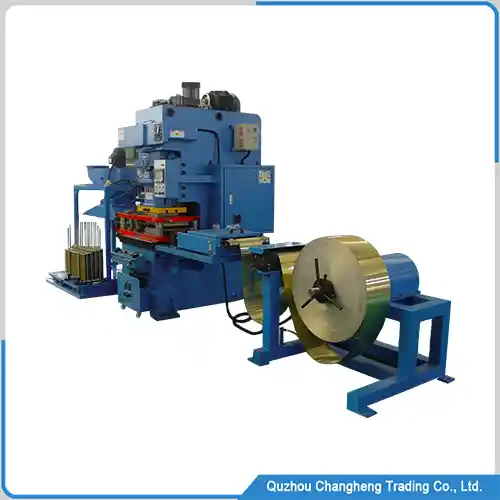
Machine Glance
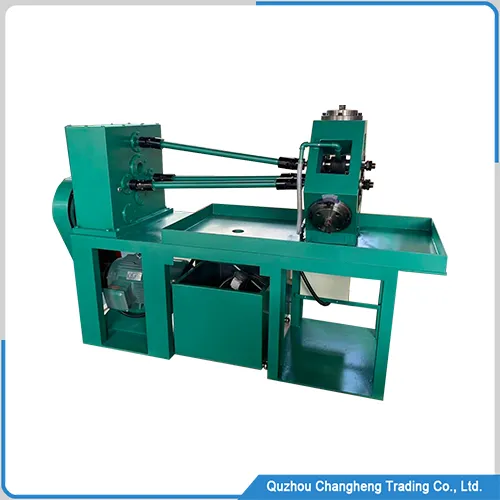
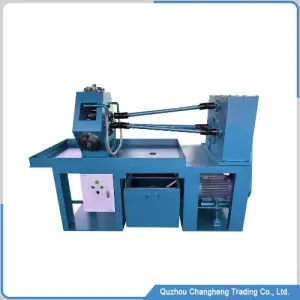
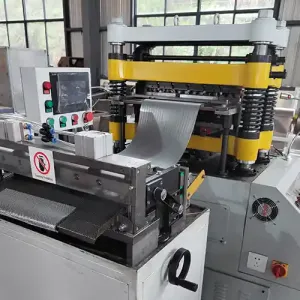
A tube fin machine presses the tube wall, or a metal sleeve fitted over it, into thin fins so a single tube carries several times the surface area it started with. Fin outside diameter runs from 18 mm to 70 mm, fin pitch up to 6 mm, finned tube length up to 15 m, main motor 11 kw.
What a Tube Fin Machine Does
The job is simple to state: make the outside of a tube bigger.
A bare tube has only its own circumference to work with. A 25 mm tube gives you about 0.08 m² of surface per metre. Press that wall into fins and the same metre carries several times the area. Same exchanger shell, more heat moved. That is the entire reason fin tube exists.
How three rollers form the fin
A electric motor drives the machine. A set of gears brings the speed down and multiplies the torque, and that torque turns three sets of rollers in step. The tube passes between them and the wall is press outward into a continuous spiral of fins.
One thing worth being clear about: this is roll forming. It is not welding, and it is not turning on a lathe. The fin and the base tube are one piece of metal with no weld line and no interrupted machined surface. That is also why an extruded fin tube handles high temperature better than a welded fin tube — under repeated heating and cooling, the weld is what fails first.
What comes off the machine
A finished finned tube. Not fins. Both ends are normally left plain for a set length, and that plain section is what goes through the tube sheet or gets welding.
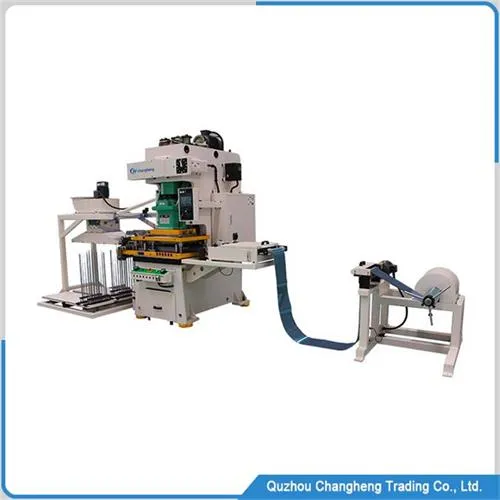
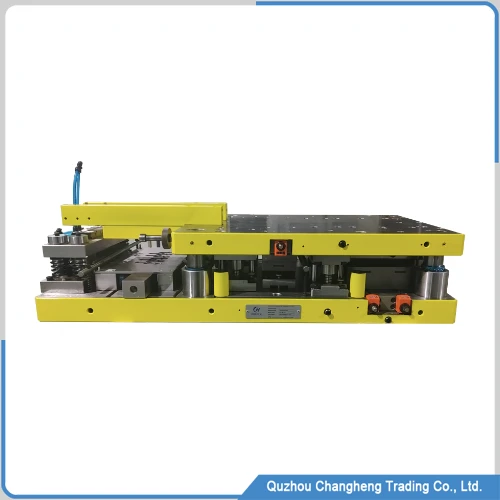
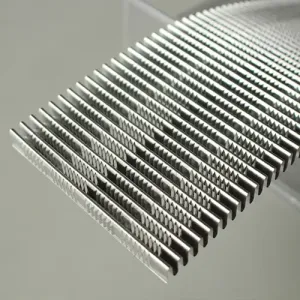
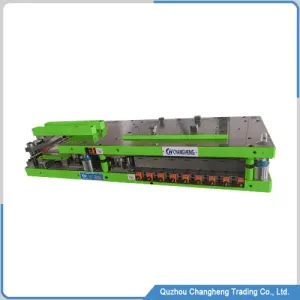
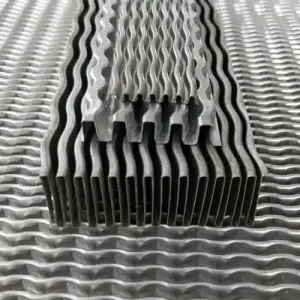
One more thing, because it comes up in every enquiry: this machine does not make the aluminum fins that go inside an exchanger core. Those stacked louvre and wavy fins come off a high-speed press running a progressive die, which is a different line — our fin press line covers that work. A tube fin machine makes the fin grow out of the tube itself, and the finished product looks nothing like a loose fin.
Fin Constructions You Can Produce
L-foot fin tube
The aluminum strip is spirally wound on the base tube, the root of the fin is bent into an L shape, and the tube wall is stuck with tension.
The production method is the simplest and the cost is the lowest. But because it is bonded by tension, there is only contact between the fin root and the tube wall, and there is no welding. Under the condition of repeated temperature rise and fall in the tube, the fin will slowly loosen without contacting the tube, and the heat exchange will fall off.
Low fin tube
Fins are rolled straight out of the wall of the base tube itself, so there is no joint to worry about anywhere on the tube.
Used inside shell-and-tube exchangers to raise the heat transfer per metre of length. Worth knowing before you specify it: rolling the fins thins the wall at the fin, so low fin tube is normally kept away from corrosive service and from anything that scales heavily.
Spiral fin tube
Squeezing the seamless tube into a spiral shape will create a vortex when the fluid flows inside the tube, disturbing the boundary layer and resulting in a higher heat transfer coefficient than a smooth tube.
Previously, this type of pipe was made using a lathe, which had low efficiency and high cost. Now, it is made by extrusion, which not only improves production efficiency but also reduces manufacturing costs
Bimetallic fin tube
This is an extrusion method to produce tube. It has two kinds of metals. Generally, fin are made of aluminum and copper, and the base tube material can be any metal
High temperature and high pressure medium is used inside the pipe, air is used outside the pipe, aluminum is used as fin for heat conduction, and steel is used as base pipe for pressure and temperature resistance.
If your product falls into this category, please let us know directly and we will provide you with the best production plan.
Types of tube fin machines we offer
Bimetallic fin tube machine
One machine producing two bimetallic finned tubes at a time — an iron or stainless inner tube and an aluminum or copper outer fin. The tube combinations can be mixed freely. This is the main machine for extruded work; the extruded finning machine covers it in more detail.
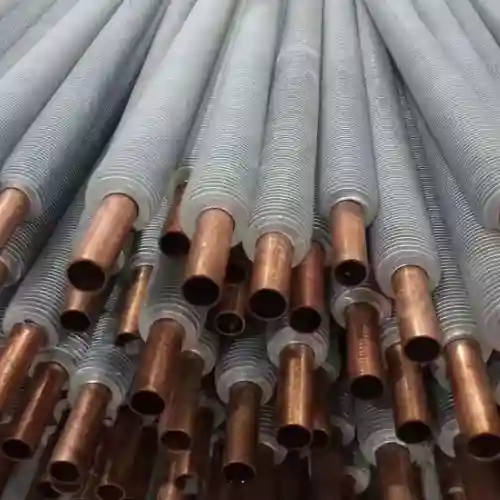
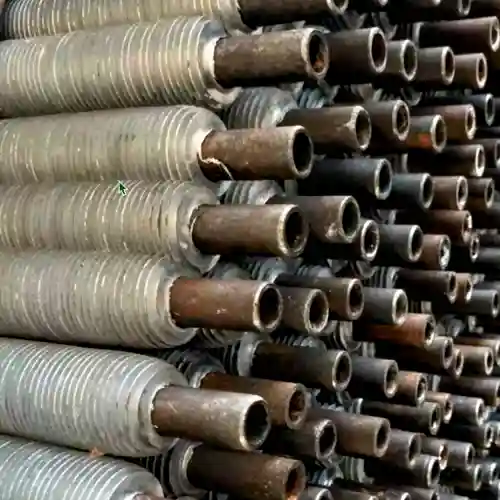
Low fin machine
Produces low fin tube, usually in a single metal — iron, copper or aluminum. Low fins sit closer together and stand shorter, so the forming load is concentrate into a smaller area and this machine runs slower than the bimetallic one. Worth saying up front to a customer, otherwise it looks like the machine is underperforming rather than doing a harder job. Full specs on the low fin machine page.
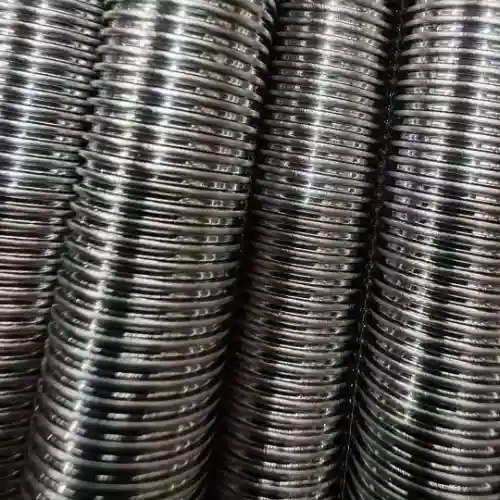
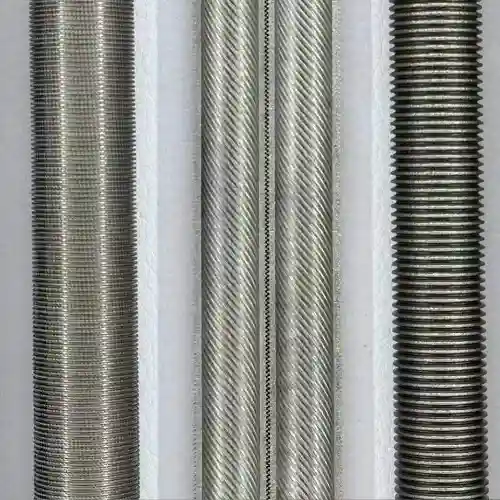
Spiral tube machine
Produces spiral fin tube. More on the spiral tube machine page.
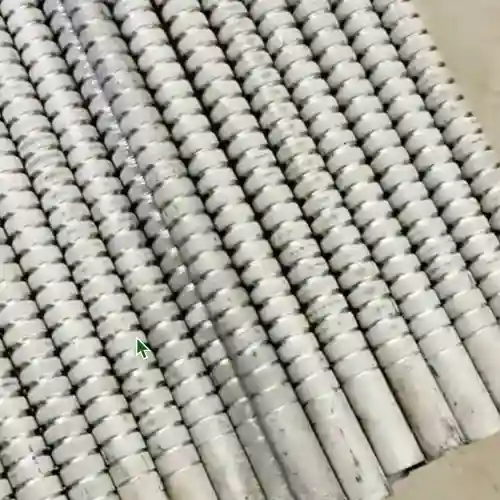
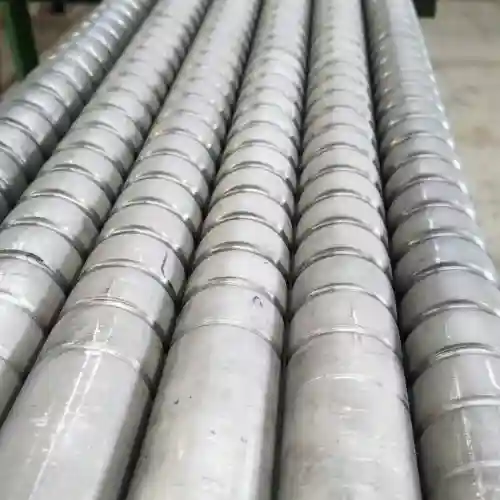
Fin winding machine
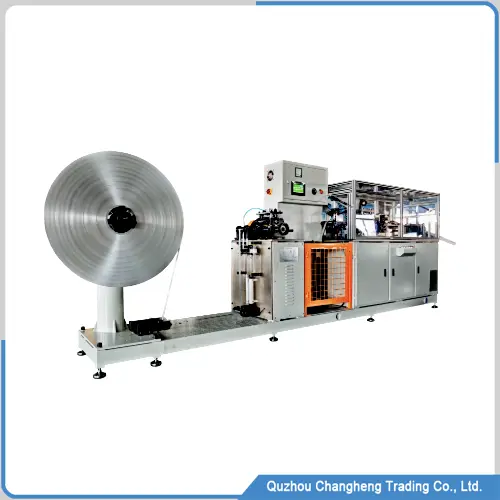
Winds aluminum foil helically onto a tube. Length is limited by the incoming tube stock and by how much floor you have, not by the machine. Compact, handles a range of diameters, and needs no welding. Minimum base tube outside diameter is 12 mm. Details on the fin winding machine page.

Tube Fin Machine Technical Parameters
| No. | ITEM | DATA |
| 1 | Fin material | Aluminum Copper |
| 2 | Base tube material | SS304 aluminum copper alloy, etc. |
| 3 | Fin material thickness | 0.2-0.4mm |
| 4 | Tube diameter range | 10-38mm 8-51mm |
| 5 | Fin height | Less than 17mm |
| 6 | Fin pitch | 0.6-2mm 1.6-10mm |
| 7 | Tube outer diameter | Φ25-88mm |
| 8 | Tube Max length | 6-20m |
| 9 | Packaging size | 224*85*145cm |
| 10 | G.W | 1480kg |
How to choose the right tube fin machine
- What is the base tube made of? Carbon steel, stainless, copper or aluminum.
- What is the fin material? Aluminum or copper.
- Which fin construction do you need? Match it against the section above.
- What is the maximum working temperature? This decides the construction, not the machine. Above 150 °C, drop the L-foot. Above roughly 320 °C, re-evaluate the whole tube.
- Base tube outside diameter and wall thickness? Wall thickness sets how much strength is left after the fins are rolled
- Fin height and pitch? These two numbers drive the roller design, which makes them the one part of the machine that cannot be change later without changing hardware.
- How long is the fin tube, and how long is the plain end at each end? The plain end is what goes through the tube sheet or gets welding, so its length comes from your assembly process, not from us.
Send us those seven answers and we can quote directly instead of trading emails for a week.
Quality Checks on the Fin Tube
These are the checks we run before a Product of fin tube machine ships. They are worth having as a reference on the buying side too.
- Fin height and pitch — sampled against the drawing, with the pitch error checked cumulatively along the full length, not just at the two ends
- Fin root contact — on wound tubes the L-foot has to sit tight against the wall. A gap is contact resistance, and a light and a feeler gauge will both find it
- Fin thickness after forming — the measured value on the finished tube, not the thickness of the aluminum strip that went in
- Plain end length at both ends — get this wrong and the tube is scrap at the assembly station
- Straightness — total bow over the full length, which matters most on long tubes
- Surface condition — torn, flattened or bent-over fins, and burrs
- Base tube pressure test — the tube’s own seal is checking separately, after the fins are on it
Coolant, Tooling and Maintenance
The structure of this tube fin machine has been revised several times and running it does not cost much. What it does need is a short list of things done on time.
- Watch the coolant
Three rollers forming fins into a tube generate serious heat, which is why the machine uses coolant. Coolant circulates for a long time and its active components get diluted as it goes. Once the concentration drops, it stops cooling and stops lubricating. Top it up with high-concentration coolant, or replace the charge outright on a schedule.
- Clean the coolant filter screen
Aluminum and metal particles build up on the screen and the coolant flow drops off behind it. Cleaning it is easy. Skipping it is not.
- Grease every universal joint
This is the item most often forgotten in daily maintenance, and the cheapest one to get right.
- Rollers wear
All the forming load lands on the rollers, so they are a consumable. When you replace them, remember that fin height and pitch are cut into the rollers, which means a roller change is also your opportunity to change product spec. If you already know you will want a different pitch later, doing it at the roller change costs far less than buying a second machine.
- One machine, many tube sizes
The same unit covers fin outside diameters from 18 mm to 70 mm. You do not buy a separate machine for each tube size.
Send Us Your Finned Tube Spec
Send your base tube diameter and wall thickness, material, fin height and pitch, tube length, plain end length and working temperature, and we will come back within 24 hours with a priced proposal covering the machine configuration and the roller set.
If a tube fin machine is not the right machine for your product, we will tell you straight and point you at a different process — including the high-frequency welded option for high-temperature economizer tubes. You can also look through the full aluminum heat exchanger production line we build around this machine.
Q & A
A: It presses fins into the outside of a tube to make a finned tube. The fins exist to add surface area, so the machine is used mainly on the air side of heat exchangers.
A: Not a different machine, but you do need different rollers. Fin height and pitch are cut into the roller surface, so a spec change means a roller change. If you are still at the selection stage, tell us every fin spec you might run in the next few years and we will design the roller set to cover them. Changing spec at that point costs nothing extra; changing it later costs a set of rollers.
A: This machine has a maximum length of 15 meters, What you can actually run also depends on the length of tube stock you buy and how much clear floor you have. Tell us your longest product and your available floor length when you enquire.
A: SS304 stainless, carbon steel, copper, aluminum, and a number of alloy steels. The fin side is normally aluminum or copper. If your base tube is something unusual — titanium or duplex stainless, for example — send us the grade. We need to work out the forming force and how the rollers will wear against it.



 wechat


